
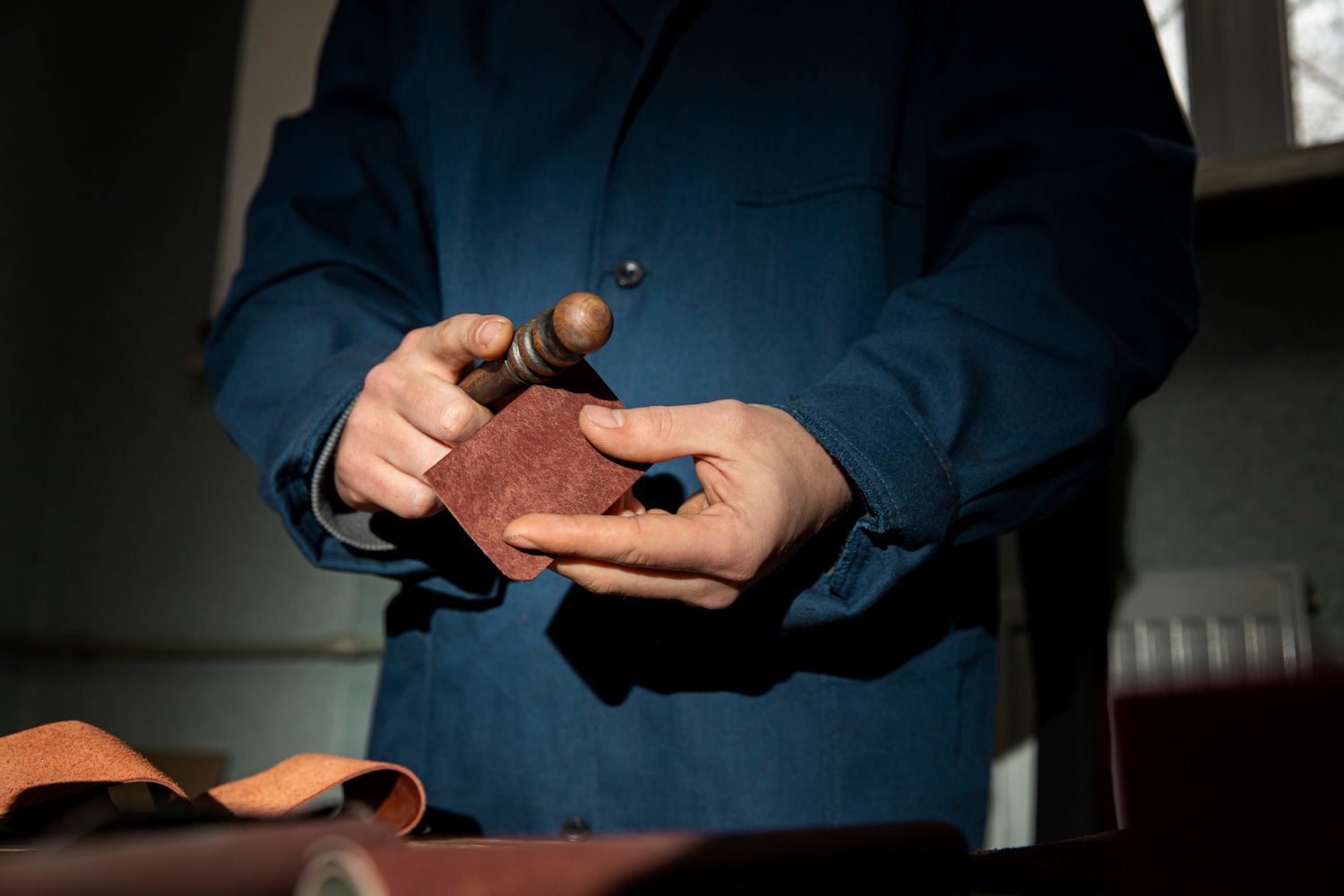

Two leather bags can sit side by side, made from hides that came from the same tannery, yet age in completely different ways over the years. One develops a rich, deepening patina and holds its shape for decades. The other cracks at the seams within a year. It is typically not the leather itself, but how the leather is processed and handled. The secret behind leather whether it’s an heirloom or ends up in a landfill, is craftsmanship, and being knowledgeable about it is a game-changer in the way you shop.
Craftsmanship Starts Long Before the Needle and Thread
Many people think of craftsmanship as only relating to stitching, however, it starts at the cutting table. Highly trained leather workers inspect every hide and use the unique markings and variations in the hide and its grain direction to determine the best use of each panel. This method is also referred to as pattern matching, and it involves using the toughest, most consistent portions of the hide in high-stress areas such as straps and bottoms and the less durable sections in areas that don’t see as much use.
This step is virtually omitted in mass production. Patterns are made in bulk, codependent on each other, and typically cut through multiple hides in a uniform manner ignoring imperfection, grain, and natural variation in the hides. That efficiency also reduces costs, but it can also result in the weakest patches of leather being precisely where the leather is required to be strongest.
Hand-Stitching vs. Machine Stitching: A Quality Signal You Can See
One of the most obvious and tell-tale signs of skill is the stitching and it can reveal a lot about what is going on beneath the surface. A lock is formed at each stitch in hand-stitched leather, usually by a saddle stitch, two needles working in opposite directions through the same hole. As one of the threads gets damaged over time, the stitch does not come undone like a single-thread machine stitch.
Machine stitching can be made faster and more affordable, and it’s OK for things that aren’t very important. However, if a machine stitch fails in a belt, bag or item that is used to transport weight or is subjected to frequent rubbing, it can cause a chain reaction, where one stitch failure compromises the entire seam. Premium leather products frequently combine both techniques at the interface of the panels, especially around the corners, handles and load bearing areas.
The Tanning Process Is Craftsmanship, Too
Craftsmanship doesn’t only apply to construction; it starts even earlier, in how the hide itself is treated. As vegetable tanning is slow, requiring natural tannins from plants, it is necessary to have careful tanners who use their knowledge and experience to adapt the hide to the tanning process over weeks, rather than relying on a chemical formula. The outcome is a leather that is more interesting, more breathable, and that will acquire a patina that will only enhance the quality of the leather.
Chrome tanning, on the other hand, is a more sped-up chemical process that is more focused on consistency and speed than character. It doesn’t mean it’s not good in terms of quality, but it just makes the material not as expressive and more uniform. And it eliminates a lot of “craft”. If you know which of the tanning processes a product has been subjected to, you’ll have some real insight into the amount of human skill used in creating the product before it ever reached the cutting table.
Edge Finishing: The Detail Most Shoppers Miss
The raw edges of any leather product are one of the easiest to see indications of the quality of the craftsmanship. Highly trained craftsmen hand sand, damp and polish edges until smooth and damp proofed, sometimes using beeswax or edge paint, to keep moisture out. The work to do this takes more time than the assembly of the remainder of a small item.
When production costs are reduced, the edges may be left raw, or treated with a less expensive synthetic sealing compound that performs well at first but flakes off or comes off after a few months. The small detail does a lot to extend the product life because it’s always exposed to friction and moisture.
Why Craftsmanship Directly Drives Long-Term Value
All of this craftsmanship translates into something measurable: how long a product survives and how it looks while doing it. A well-constructed leather item doesn’t just resist damage; it actively improves with age, developing color depth and softness that machine-made, corner-cutting alternatives never achieve.
This is especially visible in structured, heavily used items like bags. Well-made handmade leather backpacks, for instance, are typically reinforced at the shoulder straps and base, the two areas that endure the most stress from daily wear, while mass-produced versions often show weakness in exactly those spots within the first year. The craftsmanship isn’t decorative; it’s functional, directly determining whether the product survives years of actual use or ends up needing replacement.
Craftsmanship and Resale or Long-Term Value
Leather goods that are well made are also able to retain value in a different manner than those that are mass produced. Handmade vintage leather bags, jackets, and accessories often gain value over the years, and are increasingly desirable, since they are designed to last the test of time and not flake away. This is one of the reasons that some leather goods make collectors’ and long-term owners’ collections; the craftsmanship becomes the product’s story.
Poor quality machine-made products are not likely to follow the same path. After the coating has peeled off or the stitching has come undone, there is usually not much that is worth saving, and the object is usually thrown away instead of being mended or handed down.
How to Spot Real Craftsmanship When Shopping
A few practical signs can help you evaluate craftsmanship, whether you’re shopping in person or online:
- Reinforced with even proper stitching at points of stress.
- Sealed and smooth edges instead of raw or peeling edges
- Uniform grain and color in the panels, indicating good hide selection of the panels.
- Tight or securely fastened components and not light gauge or poorly fastened
- The seller’s clear explanation of how and what they use to tan and build the bed.
Brands that take craftsmanship seriously are usually happy to talk about it in detail, because it’s a genuine differentiator rather than a marketing buzzword. Regional makers with deep roots in traditional techniques, such as Alaskan Leather Company, often build their reputation specifically around this kind of hands-on process, where construction quality is treated as inseparable from the final product’s value.
The Bottom Line
Craftsmanship isn’t a soft, subjective add-on to leather quality, it’s the mechanism that determines how a product performs and ages over time. From hide selection and tanning to stitching and edge finishing, every hands-on decision compounds into a product that either lasts decades or falls apart within a year. When you understand what skilled craftsmanship actually looks like, it becomes much easier to recognize genuine value, and to see why some leather goods are worth paying more for.