
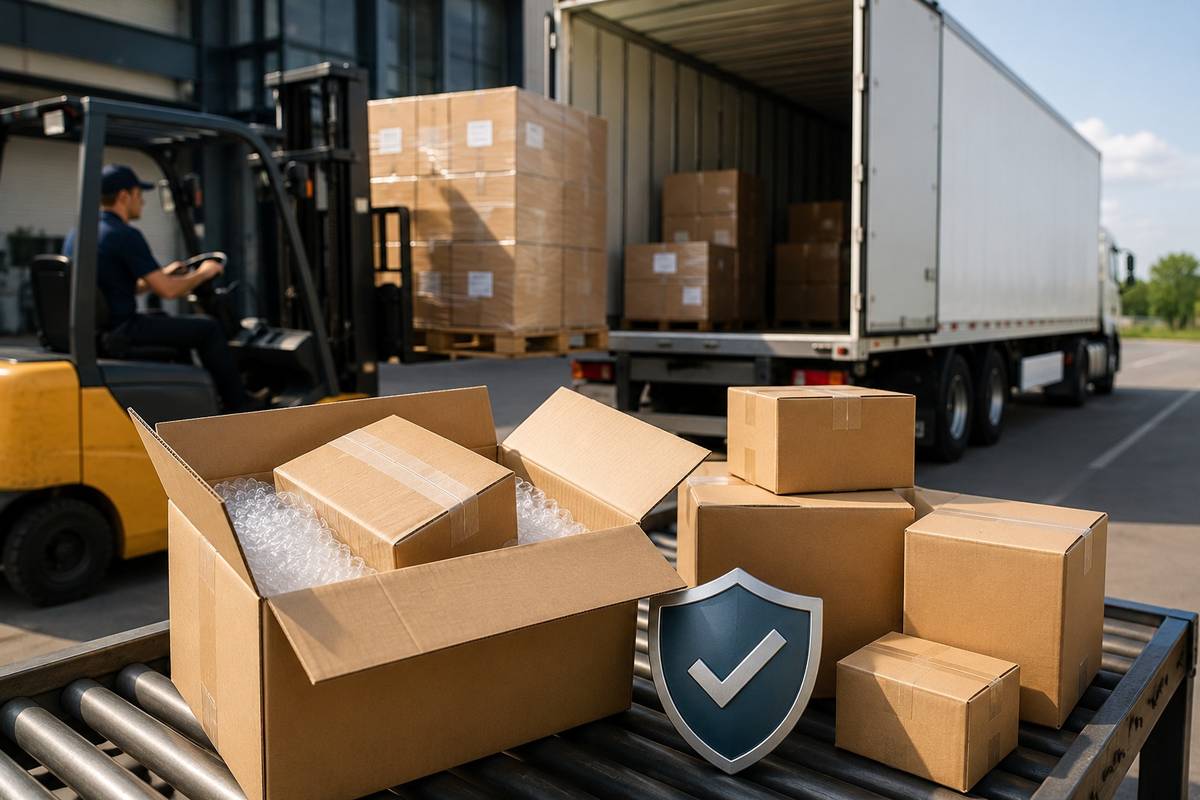

When a product leaves a warehouse, manufacturer, or retail store, its journey is far from over. Before reaching the customer’s hands, it may be loaded into a delivery vehicle, transported between facilities, stored in a warehouse, placed alongside other shipments, and handled several times along the way.
Every stage creates a potential risk of damage.
This is why packaging should not be treated as simply a container for a product. Packaging is an important part of the delivery process. The right packaging can help protect products from impacts, movement, compression, moisture, and other challenges associated with transportation.
Custom packaging takes this concept a step further by allowing businesses to design boxes and protective structures around the specific requirements of their products.
Why Product Protection Starts With Packaging
A product can be perfectly manufactured and still arrive at its destination damaged if it is not packaged properly.
During transportation, packages can experience drops, vibration, stacking pressure, sudden movement, and repeated handling. A standard box that is too large, too weak, or poorly fitted may not provide enough protection against these conditions.
Custom packaging allows businesses to consider the product’s:
- Size and shape
- Weight
- Fragility
- Material
- Components
- Shipping distance
- Transportation method
Instead of placing a product into an available box and filling the remaining space with excessive cushioning, businesses can create packaging that is designed specifically for the product.
This approach can improve both protection and packing efficiency.
Custom Fit Helps Minimize Product Movement
One of the biggest problems during shipping is unnecessary movement inside the package.
Imagine placing a small product inside a large box with several inches of empty space around it. Every time the package is moved, the product can shift and collide with the interior walls.
Over time, repeated movement can cause scratches, dents, cracks, or broken components.
A properly sized custom box reduces unnecessary space around the product. Internal inserts, dividers, and cushioning can provide additional stability when needed.
For fragile products, the goal should be to keep important components securely positioned throughout the transportation journey.
Choosing the Right Packaging Material
The packaging material should be selected according to the product and its transportation requirements.
Lightweight retail products may require simple paperboard packaging, while heavier or fragile products may benefit from corrugated structures with greater strength.
When selecting a material, businesses should consider:
Product weight: Heavier products require packaging with enough structural strength to support the load.
Fragility: Glass, electronics, ceramics, and delicate components usually need additional protection.
Shipping conditions: A package traveling through multiple transportation stages may need stronger construction than one being handed directly to a customer.
Storage: Packaging may need to withstand stacking pressure while sitting in a warehouse.
Environmental conditions: Long-distance transportation can expose packages to temperature changes, humidity, or moisture.
The objective is not to choose the thickest material possible. Instead, businesses should find a practical balance between strength, weight, cost, and protection.
Inserts and Dividers Provide Additional Protection
Custom inserts are particularly useful when a package contains several products or components.
Without an internal structure, items can move around and collide with one another during transportation. A properly designed insert gives each component its own position.
For example, a package containing a product, accessories, replacement parts, and instructions can use individual compartments to keep everything organized.
Inserts can be especially helpful for:
- Electronics and accessories
- Glass products
- Cosmetics
- Gift sets
- Mechanical components
- Collectibles
- Small tools
Besides improving protection, inserts can also improve the customer’s unboxing experience. When every component has a designated place, the package feels more organized and professionally designed.
Custom Packaging Can Improve Shipping Efficiency
Protection is only one advantage of customized packaging.
Oversized packages can take up unnecessary space in warehouses, delivery vehicles, and storage areas. They may also require additional filler material to prevent products from moving.
Right-sized packaging can help businesses use available space more efficiently.
This becomes especially important for companies shipping products at scale. A small reduction in unnecessary packaging space can become significant when hundreds or thousands of packages are being transported.
However, businesses should avoid making the package unnecessarily small. There needs to be enough room for protective materials and safe handling.
The ideal package is compact without compromising product protection.
Packaging Should Match the Transportation Journey
Different delivery journeys create different packaging requirements.
Businesses should consider the complete delivery journey, from warehouse handling to transportation and shipping, when choosing the right packaging for their products.
A product shipped locally may experience fewer handling stages than a product traveling across the country or internationally.
Before selecting a packaging structure, businesses should consider the complete journey.
Will the package be:
- Transported by truck?
- Moved through a distribution center?
- Stored in a warehouse?
- Loaded and unloaded multiple times?
- Stacked with heavier packages?
- Delivered by courier?
- Exposed to changing weather conditions?
Understanding these factors allows businesses to design packaging around realistic transportation conditions.
For example, a fragile product traveling a long distance may require stronger outer packaging and more secure internal protection than a durable product being delivered locally.
Strong Packaging Can Help Reduce Shipping Damage
Product damage can create costs that extend well beyond the original product value.
A damaged shipment may result in:
- Replacement costs
- Return shipping expenses
- Customer complaints
- Negative reviews
- Delayed orders
- Lost customer trust
- Additional packaging waste
For businesses, preventing damage is therefore much more efficient than dealing with the consequences afterward.
Custom packaging can help address common causes of shipping damage by combining an appropriate outer box with internal protection.
The packaging does not need to be excessive. It needs to be purposefully designed.
Branding and Protection Can Work Together
Protective packaging does not have to look plain or unattractive.
Businesses can combine functional packaging structures with branding elements such as logos, colors, product information, and carefully selected finishes.
This is particularly valuable for e-commerce businesses.
When customers receive an online order, the package is often their first physical interaction with the brand. A well-designed package can communicate quality before the customer even sees the product.
For businesses looking for packaging designed around specific product and shipping requirements, We Print Boxes can provide a practical option for creating product-specific packaging and protective structures.
The important point is that branding should complement protection rather than interfere with it.
Testing Packaging Before Large-Scale Shipping
A packaging design may look excellent on a computer screen but still have weaknesses in real-world use.
Testing allows businesses to identify those weaknesses before large numbers of products are shipped.
A basic packaging evaluation can include checking:
- Whether the product moves inside the box
- Whether corners remain protected
- Whether the box maintains its shape
- Whether internal inserts hold components securely
- Whether the package can withstand normal handling
- Whether the product remains undamaged after testing
Businesses can also simulate reasonable transportation conditions through controlled drop, compression, and movement tests.
If the product moves too much inside the box, simply adding more cushioning may not always be the best solution. A better-fitting box or redesigned insert could solve the underlying problem.
Consider the Weight of the Complete Package
Packaging design should consider the total shipping weight, not only the product itself.
A business may create extremely protective packaging, but if the box and protective materials add unnecessary weight, shipping expenses can increase.
This is why efficient packaging design matters.
A well-designed package can provide sufficient protection while avoiding unnecessary layers of material. Right-sizing the outer box and using strategically positioned inserts can help create a more efficient package.
The best packaging solution is therefore not necessarily the heaviest one.
It is the one that provides the right level of protection for the product and transportation conditions.
Sustainable Packaging Can Support Efficient Shipping
Sustainability is another reason to rethink oversized or unnecessarily complicated packaging.
Using more material does not automatically mean better protection. In some cases, intelligent structural design can provide similar or better protection with less material.
Businesses can consider:
- Right-sized boxes
- Recyclable materials
- Efficient inserts
- Reduced filler material
- Reusable packaging structures
- Lightweight protective solutions
Reducing unnecessary packaging can also improve storage and transportation efficiency.
The goal should be to use enough material to protect the product without creating avoidable waste.
Packaging and Logistics Should Work Together
Packaging decisions should ideally be considered alongside logistics rather than separately.
A logistics team understands how products move through warehouses, trucks, distribution centers, and delivery networks. Packaging designers understand how to protect the product inside its container.
Combining these perspectives can produce better results.
For example, knowing that packages will be stacked during transportation can influence box strength. Knowing that products will be handled repeatedly can influence internal cushioning. Understanding vehicle space can influence package dimensions.
When packaging and logistics are planned together, businesses can create a more efficient delivery system from the beginning.
The Customer Experience Matters Too
Safe delivery is the primary goal, but packaging also contributes to the customer’s overall experience.
A damaged or difficult-to-open package can leave a negative impression even if the product itself is excellent.
On the other hand, a secure, organized, and easy-to-open package can make the delivery feel more professional.
Customers appreciate packaging that:
- Protects the product
- Keeps components organized
- Is easy to open
- Looks clean and professional
- Does not contain excessive unnecessary material
This makes packaging an important connection between logistics and customer satisfaction.
Conclusion
Safe product delivery begins long before a package reaches a transportation vehicle. It begins with choosing packaging that is appropriate for the product, the handling process, and the journey ahead.
Custom packaging can help businesses reduce unnecessary movement, protect fragile components, improve shipping efficiency, organize products, and create a better customer experience.
The most effective approach is not simply to use more packaging. It is to design smarter packaging.
By considering box dimensions, materials, inserts, transportation conditions, total package weight, and real-world testing, businesses can create packaging that protects products without unnecessary cost or waste.
When packaging and transportation are planned together, the result is a smoother delivery process, fewer damaged shipments, and greater confidence that products will arrive at their destination exactly as intended.
FAQ’s
What is custom packaging?
Custom packaging is packaging designed around the specific dimensions, shape, weight, and protection requirements of a particular product. It can include customized boxes, inserts, dividers, and other protective structures.
Why is custom packaging important for shipping?
Custom packaging can help reduce product movement, improve protection, use storage space efficiently, and reduce the likelihood of damage during transportation.
Is custom packaging only useful for fragile products?
No. Although fragile products often benefit significantly from customized protection, businesses shipping durable products can also use custom packaging to improve efficiency, presentation, organization, and shipping space.
How can inserts protect products during delivery?
Inserts create dedicated spaces for individual products or components. They help prevent items from moving around and colliding with each other inside the package.
Should packaging be tested before shipping?
Yes. Testing can help identify problems with box strength, product movement, inserts, and overall protection before the packaging is used for a large number of shipments.